
Cleaning Your Solar Panels: A Guide to Maintaining Efficiency
As the sun shines bright, your solar panels work hard to generate electricity. However, just like any other surface, they can get dirty and affect their performance. In fact, it’s estimated that neglecting to clean your solar panels can lead to a loss of efficiency of up to 30%.
Why Clean Your Solar Panels?
Cleaning your solar panels is an essential part of maintaining their efficiency. While rain helps to remove debris, dust, and other contaminants, it’s not enough to keep them spotless. When organic matter like bird droppings, tree sap, or pollen accumulates on the surface, it can cause damage to the panel’s microelectronic components.
In our previous article on Solar Panel Cleaning, we discussed the common sources of contamination that affect solar panel efficiency and how their position on the roof impacts maintenance frequency. In this article, we’ll dive deeper into cleaning your solar panels and provide you with practical tips and recommendations.
Cleaning Your Solar Panels: A DIY Guide
While automated systems exist for cleaning solar panels (solar panel cleaning robots), many homeowners prefer to do it themselves. Fortunately, there are various DIY kits available on the market that make the process easier and safer.
However, before attempting to clean your solar panels yourself, consider the following:
- The roof’s angle and layout can make the task challenging and hazardous.
- Using common household detergents can leave residue or damage the panel’s surface.
To safely clean your solar panels, follow these guidelines:
Choosing the Right Cleaning Tools
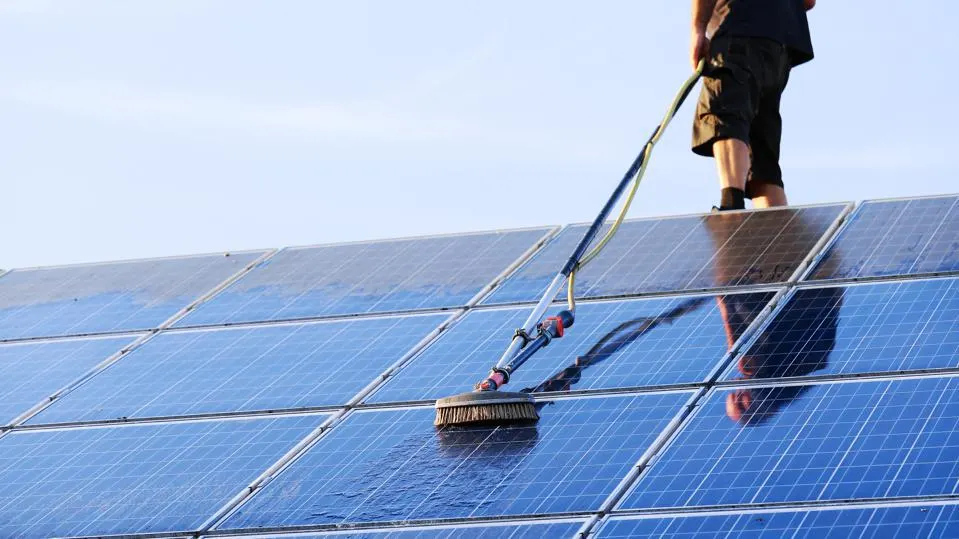
A professional-grade brush with soft bristles is essential for cleaning solar panels. The brush should have a telescoping handle and a hose attachment to ensure proper cleaning. Additionally, consider investing in a water filtration system to prevent mineral deposits.
Using the Correct Cleaning Solution
When using a cleaning solution, choose one that’s specifically designed for solar panel cleaning. Avoid using household detergents or harsh chemicals, as they can damage the panel’s surface or leave residue.
Best Practices for Cleaning Solar Panels
To ensure effective and safe cleaning:
- Always read the manufacturer’s instructions before using any cleaning products.
- Test a small area of the panel first to ensure the cleaning solution won’t cause damage.
- Use distilled water or a filtered hose attachment to prevent mineral deposits.
- Avoid applying excessive pressure, which can damage the panels’ surfaces.
Professional Assistance
If you’re not comfortable with DIY cleaning or if your solar panels are difficult to access, consider hiring a professional cleaning service. They’ll have the necessary equipment and expertise to ensure your panels receive proper maintenance.
Specialized Cleaning Products
Some manufacturers offer specialized cleaning products specifically designed for their solar panel systems. If your system is compatible with one of these products, consult the manufacturer’s instructions for guidance on how to use it safely.
Tips and Tricks
- Regularly inspect your solar panels for signs of contamination or damage.
- Use a microfiber cloth to clean the panels’ surfaces before using any cleaning solutions.
- Consider investing in a roof-mounted cleaning system for easier access.
By following these guidelines and best practices, you can keep your solar panels clean, efficient, and performing at their best. Remember to always prioritize safety and follow manufacturer instructions when it comes to cleaning your solar panels.
Frequently Asked Questions
Q: How often should I clean my solar panels?
A: Depending on the amount of debris and contamination on your panels, you may need to clean them every 2-4 months.
Q: Can I use a regular household detergent to clean my solar panels?
A: No, using household detergents can leave residue or damage the panel’s surface. Instead, choose a cleaning solution specifically designed for solar panels.
Q: Are there any specific safety precautions I should take when cleaning my solar panels?
A: Yes, always wear protective gear, including gloves and safety glasses, when working at heights. Make sure you have a stable ladder or access to a safe climbing area.
Q: Can I use a hose attachment to clean my solar panels?
A: No, using a regular hose can cause mineral deposits or damage the panel’s surface. Instead, use distilled water or a filtered hose attachment specifically designed for cleaning solar panels.
Q: Are there any specific cleaning products recommended for solar panels?
A: Yes, some manufacturers offer specialized cleaning products specifically designed for their solar panel systems. Consult the manufacturer’s instructions for guidance on how to use these products safely.
Q: Can I clean my solar panels myself or should I hire a professional?
A: If you’re comfortable with DIY cleaning and have access to proper equipment, you can clean your solar panels yourself. However, if you’re not confident in your abilities or if your panels are difficult to access, consider hiring a professional cleaning service.
Q: Are there any specific safety precautions I should take when working at heights?
A: Yes, always wear protective gear, including gloves and safety glasses, when working at heights. Make sure you have a stable ladder or access to a safe climbing area.
Q: Can I use a microfiber cloth to clean my solar panels before using any cleaning solutions?
A: Yes, microfiber cloths can be an effective way to remove loose debris from your solar panels’ surfaces before using any cleaning solutions.
Q: Are there any specific tips for maintaining my solar panels?
A: Yes, regularly inspect your solar panels for signs of contamination or damage. Consider investing in a roof-mounted cleaning system for easier access and use distilled water or a filtered hose attachment to prevent mineral deposits.


