
Introduction
Have you ever heard of an animal that can mimic not only its own species but also other birds, animals, and even mechanical sounds? Meet the menura, also known as the Australian lyrebird. This extraordinary bird has fascinated humans for centuries with its remarkable abilities, making it a must-learn about for anyone interested in ornithology.
What is a Menura?
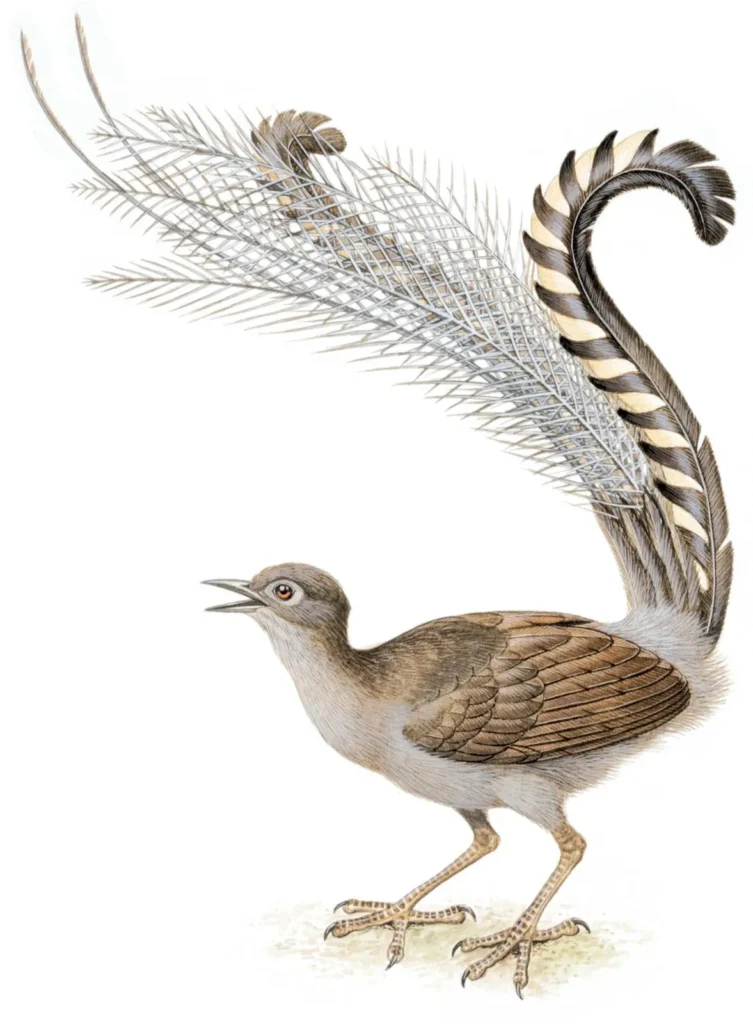
The menura is a genus of birds within the family Menuridae, and it’s the only species within this family. It’s characterized by its distinctive tail feathers, which are used extensively during courtship displays to attract females. The males’ elaborate tail feathers make them look like they’re playing a lyre, hence the name “lyrebird.”
Physical Characteristics
The menura is relatively small, measuring approximately 30 cm (12 in) in length. However, its tail feathers can reach up to 1 meter (3.3 ft) in length, making it one of the most distinctive features of this bird species. While males display these impressive feathers during courtship, they are not as attractive to the untrained eye.
Habitat and Distribution
Menuridae are endemic to Australia, with a strong presence in the eastern regions. Tasmania is also home to this species, which was introduced in the 19th century. These birds prefer forests and woodlands, where they can be found hiding amongst foliage or foraging for food.
Behavior and Diet
Menuridae are primarily ground-dwelling birds that tend to stay hidden from view. They have a low flying ability, often “chopping” through undergrowth in search of insects, spiders, and other small invertebrates. While they do occasionally eat seeds and fruits, their diet consists mainly of invertebrates.
Imitation Abilities
One of the most remarkable features of menuridae is their incredible mimicry abilities. Both males and females can reproduce sounds from various sources, including other birds, animals, and even mechanical noises like a chainsaw or a car alarm. The most famous example is James, an Australian lyrebird that learned to mimic over 20 different bird calls and several human voices.
Anatomical Adaptations
The menura’s ability to mimic sounds can be attributed to its unique anatomy. Their syrinx, located at the base of the trachea, allows for a wide range of vocalizations. This is made possible by the presence of two pairs of muscles that control the syrinx, providing the necessary flexibility.
Syrinx Structure
The menura’s syrinx is composed of two pairs of cartilaginous rings, which vibrate to produce sound waves. These cartilages are covered in tiny muscles called muscles 12 and 13, which allow for precise control over the bird’s vocalizations.
Brain Structure
Research has shown that the menura’s brain structure is unique compared to other birds. The syrinx is connected to a highly developed auditory cortex, allowing the bird to process and reproduce complex sounds with ease.
Conservation Status
Unfortunately, menuridae are not as common in captivity as other bird species. While some zoos and wildlife parks may have them on display, they are not widely kept as pets due to their specialized care requirements.
Threats to Menura Populations
Several threats face the Australian lyrebird population, including habitat loss and fragmentation, climate change, and predation by introduced species like cats and foxes. Conservation efforts are underway to protect these remarkable birds and their habitats.
Conservation Efforts
Several organizations, such as the Australian Wildlife Conservancy and the Tasmanian Wilderness Society, are working to protect menura populations and their habitats. These efforts include habitat restoration, predator control, and education programs aimed at raising awareness about the importance of preserving this unique species.
Conclusion
The Australian lyrebird is a true marvel of nature, with its impressive mimicry abilities and striking physical characteristics. While it’s unlikely that you’ll encounter one in person anytime soon, learning about this fascinating bird can inspire a deeper appreciation for the natural world.
Frequently Asked Questions (FAQs)
- What does the name “lyrebird” mean?
The name “lyrebird” comes from the fact that the male’s tail feathers resemble the shape of a lyre, a musical instrument played with two arms and two strings.
- How do menuridae mimic sounds?
Menuridae have a unique anatomy that allows them to produce a wide range of vocalizations. Their syrinx is highly flexible, making it possible for them to reproduce various sounds.
- Can menuridae mimic human voices?
Yes, both males and females can learn to mimic certain aspects of human speech, including sounds like animal noises or even car alarms!
- Where are menuridae found in the wild?
Menuridae are primarily found in eastern Australia, with a presence in Tasmania as well.
- What do menuridae eat?
Menuridae primarily feed on insects, spiders, and other small invertebrates, although they may also consume seeds and fruits occasionally.
- Are menuridae endangered?
While not currently listed as endangered, the Australian lyrebird’s population is declining due to habitat loss and fragmentation.
- Can I see menuridae in captivity?
Some zoos and wildlife parks have menuridae on display, but it’s rare to find them in private collections or as pets.
- How can I learn more about the Australian lyrebird?
If you’re fascinated by the unique abilities of this bird species, consider reading up on its habitat, behavior, and conservation status through reputable sources like wildlife organizations or scientific journals.
Interesting Facts
- Menuridae are known to mimic not only sounds but also visual displays, such as the movements of other birds or even a snake’s body language.
- The Australian lyrebird is considered one of the most intelligent bird species in the world, with studies showing that they can solve complex problems and learn from experience.
Research and Study
Scientists continue to study menuridae to better understand their remarkable abilities. Research has focused on the syrinx structure, brain function, and behavior, providing insights into the biology and ecology of these fascinating birds.
Conclusion
The Australian lyrebird is a true marvel of nature, with its impressive mimicry abilities and striking physical characteristics. By learning more about this fascinating bird species, we can gain a deeper appreciation for the natural world and the importance of preserving it for future generations.


