
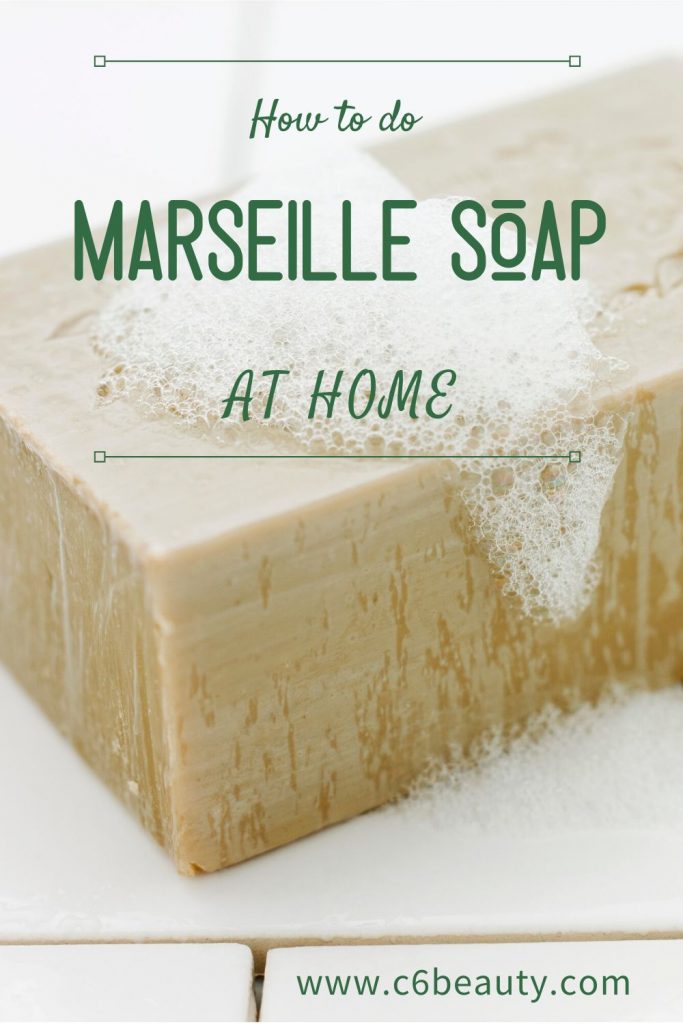
Do you know that making Marseille soap is a simple process that can be done from the comfort of your own home? Yes, the natural and oldest known soap can be made by following some basic ingredients. The only warning is to handle soda caustica with care during preparation. Let’s see how to make Marseille soap at home, step by step.
Marseille Soap Ingredients: What You’ll Need
Before we dive into the process of making Marseille soap, it’s essential to understand what ingredients you’ll need. Here are the basic materials required:
- 120 grams of soda caustica (sodium carbonate)
- 300 grams of water
- 1 liter of extra virgin olive oil
- Gloves: to protect your hands from potential irritation or burns
- Glasses: to protect your eyes from any splashes or spills
- Mask: to prevent inhaling any particles or fumes
- A thermometer that can withstand temperatures up to 110°F (and below 30°F)
- Immersion blender: for mixing and blending the ingredients
- Plastic molds: to shape the soap into its desired form
- Containers: for storing your finished Marseille soap
The Marseille Soap Making Process: Step-by-Step Guide
Now that you have all the necessary ingredients, it’s time to start making your Marseille soap. Here’s a step-by-step guide:
- Prepare the Soda Caustica: Pour the water into a heat-resistant container and then slowly add the soda caustica, being extremely careful: the temperature rises quickly to 100 degrees, so wait for it to cool down to 45 degrees. Use a thermometer to check the temperature.
- Heat the Olive Oil: In another pot, heat the extra virgin olive oil until it reaches 45-48 degrees.
- Mix the Ingredients: Once that’s done, pour in the water with soda caustica, being extremely careful again
- Mix Quickly: Mix quickly, using an immersion blender, until the mixture becomes clearer: it should reach the “thread” phase
- Add Essential Oils or Other Oils: Add a few drops of essential oil or another oil: it’s recommended to use 20 drops of lavender essential oil (disinfectant) and flowers of lavender (peeling effect)
- Pour into Molds: Once that’s done, pour the mixture into the plastic molds and wait for at least 24 hours: this is the time needed for the solidification process
- Remove from Molds: Once you remove the soap from the molds, cut it into pieces and let them age in a dry and well-ventilated place, away from direct sunlight, for at least one month.
Tips and Reminders
- During saponification and aging, soda caustica becomes biodegradable and non-toxic
- It’s recommended to wear gloves, glasses, and a mask when handling soda caustica, as it can be corrosive
Understanding the Saponification Process
Saponification is the process of converting oils into soap. In the case of Marseille soap, the olive oil reacts with the soda caustica to create a natural cleansing agent.
During saponification, the mixture of water and soda caustica creates an alkaline solution, which reacts with the triglycerides in the olive oil to form glycerin and fatty acid salts. These salts are what give Marseille soap its characteristic properties and make it effective for cleaning and moisturizing the skin.
The Benefits of Making Your Own Marseille Soap
Making your own Marseille soap at home has several benefits:
- Natural Ingredients: By using natural ingredients, you can avoid harsh chemicals and artificial additives that can be found in commercial soaps.
- Customizable: With homemade Marseille soap, you can customize the recipe to suit your skin type and preferences.
- Cost-Effective: Making your own Marseille soap at home can be more cost-effective than buying commercial soap.
Common Mistakes to Avoid
When making Marseille soap at home, there are a few common mistakes to avoid:
- Incorrect Temperature: If the temperature is not controlled properly during saponification, it can lead to an uneven chemical reaction and affect the quality of the soap.
- Insufficient Aging Time: Failing to allow the soap enough time to age can result in a soap that is too harsh or lacks lather.
Conclusion
Making Marseille soap at home is a fun and rewarding process that can be done with just a few simple ingredients. With its natural properties and moisturizing effects, Marseille soap is perfect for skin care. So why not give it a try?


