
As we stand by the ocean, feeling the gentle caress of the sea breeze on our skin, we often take for granted this natural phenomenon that brings us comfort and relief from the heat. But have you ever stopped to think about what makes a breezy day so special? In this article, we’ll delve into the world of sea breezes, exploring their definition, formation, and functionality.
What is a Breeze?
Before we dive into the specifics of sea breezes, let’s clarify what we mean by the term “breeze.” It’s easy to assume that all breezes are created equal, but in reality, they’re a type of periodic wind that’s distinct from other types of winds. Sea breezes, in particular, are characterized by their gentle intensity and local nature.
The Anatomy of a Breeze
So, what makes up this special type of wind? A sea breeze is essentially a wind that blows from the sea towards the land, often with a temperature difference between the two zones being the primary driver. This temperature difference creates an area of low pressure near the ground, which pulls in air from the surrounding environment to fill the gap.
The Science Behind Sea Breezes
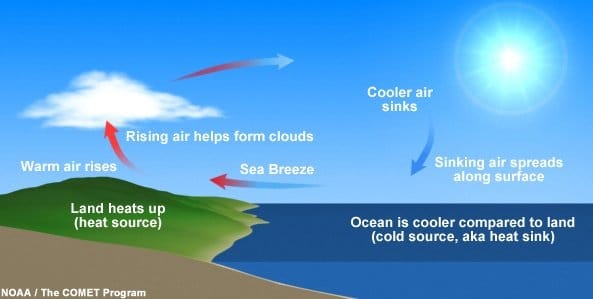
Now that we’ve established the basics of sea breezes, let’s get into the nitty-gritty details. The formation of a sea breeze is largely influenced by temperature differences between the ocean and land. When the sun heats the land, it warms the air closest to the surface, causing it to expand and rise. This creates an area of low pressure near the ground, which pulls in cooler air from over the ocean.
As this cooled air moves towards the land, it creates a gentle breeze that brings relief from the heat. But what happens when the sun sets? The temperature difference between the sea and land reverses, creating a situation where the land heats up more quickly than the sea. This leads to an area of high pressure near the ground, which pushes the air out towards the ocean.
The 12-Hour Cycle
One of the most fascinating aspects of sea breezes is their tendency to change direction every 12 hours. This cycle is driven by the temperature difference between the sea and land, as well as other environmental factors like humidity and wind patterns.
During the day, the land heats up more quickly than the sea, creating a low-pressure area near the ground that pulls in air from over the ocean. As this cooler air moves towards the land, it creates a gentle breeze that brings relief from the heat.
At night, the temperature difference reverses, with the land cooling down faster than the sea. This creates an area of high pressure near the ground, which pushes the air out towards the ocean. As this warm air rises over the land, it cools down and becomes denser, eventually sinking back to the surface as cooler air moves in from over the ocean.
Breezes Beyond the Sea
While sea breezes are perhaps the most well-known type of breeze, they’re not the only ones that exist. Breezes can also form on land, driven by temperature differences between different regions or topographies. For example, a mountain breeze forms when warm air rises from the valley floor and cools down as it reaches higher elevations.
Similarly, a lake breeze forms when cool air moves over a body of water, bringing relief from the heat. And in coastal areas, a land breeze can form when the temperature difference between the sea and land reverses at night, creating a gentle wind that blows from the land towards the sea.
The Role of Topography
Topography plays a significant role in shaping the patterns of breezes on land. Mountains and hills can create microclimates that are cooler or warmer than the surrounding areas, leading to the formation of mountain breezes. Similarly, bodies of water like lakes and rivers can influence local wind patterns by creating areas of low pressure near their shores.
The Impact of Human Activity
Human activity can also impact the formation and functionality of sea breezes. For example, urbanization can lead to the creation of heat islands, where buildings and pavement absorb and retain heat, leading to a decrease in air quality and an increase in temperatures. Similarly, agricultural activities like deforestation or irrigation can alter local wind patterns by creating areas of high pressure near the ground.
Conclusion
In conclusion, sea breezes are an fascinating phenomenon that’s driven by complex interactions between temperature differences, humidity, and wind patterns. By understanding these dynamics, we can better appreciate the beauty and importance of these gentle winds that bring us comfort and relief from the heat.
Frequently Asked Questions
- What causes a sea breeze to form?
A sea breeze forms when there is a temperature difference between the ocean and land, creating an area of low pressure near the ground that pulls in air from over the ocean. - How often do sea breezes occur?
Sea breezes can occur daily, but their frequency and intensity vary depending on factors like temperature differences, humidity, and wind patterns. - What happens to the direction of a sea breeze every 12 hours?
The direction of a sea breeze changes every 12 hours due to changes in temperature difference between the sea and land. - Can other types of breezes form on land?
Yes, other types of breezes can form on land, driven by temperature differences between different regions or topographies. - What is the main driver of a mountain breeze?
A mountain breeze forms when warm air rises from the valley floor and cools down as it reaches higher elevations. - Can sea breezes affect weather patterns?
Yes, sea breezes can influence local weather patterns by bringing cooler air to coastal areas or creating an area of low pressure near the ground. - How do lake breezes form?
Lake breezes form when cool air moves over a body of water, bringing relief from the heat. - Can land breezes occur at night?
Yes, land breezes can occur at night, driven by the temperature difference between the sea and land reversing as the sun sets.
Interesting Facts
- The word “breeze” comes from the Old English word “brēosan,” which means “to blow.”
- Sea breezes are an important factor in shaping coastal ecosystems, influencing the distribution of marine life and the formation of sand dunes.
- The 12-hour cycle of sea breezes can have a significant impact on local weather patterns, leading to increased precipitation or cooler temperatures.
- Breezes can also play a role in shaping cultural and social norms, with different communities developing unique traditions and customs around the wind.
Conclusion
In conclusion, sea breezes are an fascinating phenomenon that’s driven by complex interactions between temperature differences, humidity, and wind patterns. By understanding these dynamics, we can better appreciate the beauty and importance of these gentle winds that bring us comfort and relief from the heat. Whether you’re a beachcomber, a sailor, or simply someone who appreciates the simple pleasures in life, sea breezes are an essential part of our shared human experience.


