
Understanding Carbon Footprint: A Guide to Calculating Your Impact
As the world grapples with the challenges of climate change, it’s essential to understand the concept of carbon footprint and its significance in measuring our impact on the environment. In this article, we’ll delve into what carbon footprint is, how it’s calculated, and explore the various methods used to assess its effects.
What is Carbon Footprint?
Carbon footprint refers to the total amount of greenhouse gases emitted by an individual, organization, or product over a specific period. It’s a quantifiable measure that helps us understand our contribution to climate change. The concept is based on the idea that human activities, such as energy consumption and transportation, release large amounts of carbon dioxide into the atmosphere, leading to global warming.
Calculating Carbon Footprint
To calculate your carbon footprint, you’ll need to consider several factors, including:
- Energy consumption (electricity, gas, and oil)
- Transportation (driving, flying, and other modes of transportation)
- Food production and consumption
- Waste management
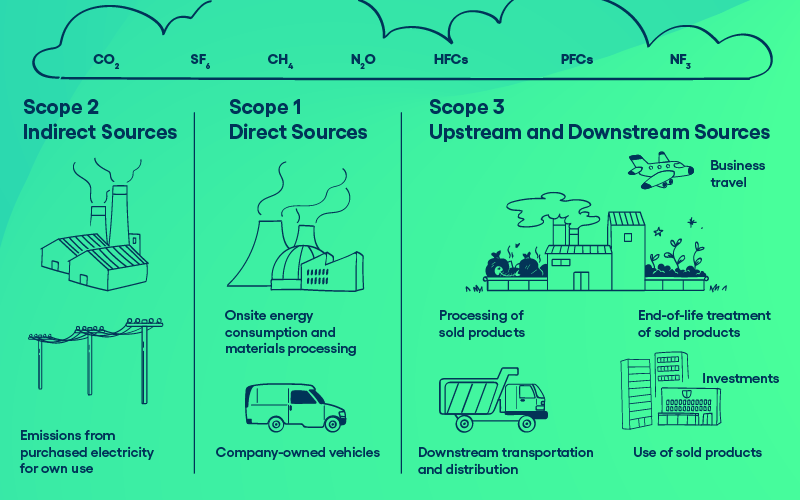
There are various methods used to calculate carbon footprint, including the Greenhouse Gas Protocol (GHG Protocol) and ISO standards. The GHG Protocol is a widely accepted standard for calculating emissions from organizations and industries.
Understanding Emissions
When calculating carbon footprint, it’s essential to understand which gases contribute to climate change. The six primary greenhouse gases are:
- Carbon dioxide (CO2)
- Methane (CH4)
- Nitrous oxide (N2O)
- Sulfur hexafluoride (SF6)
- Hydrofluorocarbons (HFCs)
- Perfluorocarbons (PFCs)
These gases have different global warming potentials, which are used to calculate the equivalent amount of CO2 emissions.
The Importance of Calculating Carbon Footprint
Calculating carbon footprint is crucial in understanding our impact on the environment and identifying areas for improvement. By quantifying our emissions, we can:
- Set realistic targets for reducing greenhouse gas emissions
- Develop strategies for mitigating climate change
- Make informed decisions about energy consumption and transportation
Real-World Examples
Let’s take a look at some real-world examples of carbon footprint calculations:
- A study by the European Environment Agency found that the total CO2 emissions from European countries in 2015 were approximately 10.3 gigatons.
- A report by the World Business Council for Sustainable Development highlights the importance of calculating carbon footprint in industries, such as agriculture and forestry.
The Benefits of Calculating Carbon Footprint
Calculating carbon footprint offers numerous benefits, including:
- Reducing greenhouse gas emissions: By understanding our impact on the environment, we can set realistic targets for reducing emissions and develop strategies for mitigation.
- Improving energy efficiency: Calculating carbon footprint helps us identify areas where energy consumption is high and implement measures to reduce it.
- Promoting sustainable transportation: Understanding our carbon footprint can encourage us to switch to more environmentally friendly modes of transportation, such as public transport or cycling.
- Supporting sustainable agriculture: By calculating carbon footprint in agriculture, we can identify areas where emissions are high and promote practices that reduce them.
Challenges and Limitations
While calculating carbon footprint is a crucial step in understanding our impact on the environment, it’s not without its challenges and limitations. Some of these include:
- Data accuracy: Calculating carbon footprint requires accurate data, which can be difficult to obtain, especially for individuals.
- Complexity: Carbon footprint calculations involve complex mathematical models and can be challenging to understand.
- Limited availability of tools: While there are many online tools available for calculating carbon footprint, not all countries have access to these resources.
Conclusion
Calculating carbon footprint is a critical step in understanding our impact on the environment and mitigating climate change. By applying various methods and considering multiple factors, we can develop a comprehensive picture of our emissions and identify areas for improvement. As individuals, organizations, and governments, it’s essential that we work together to reduce greenhouse gas emissions and create a more sustainable future.
FAQs
- What is the main purpose of calculating carbon footprint?
- To understand our impact on the environment and identify areas for improvement.
- Which gases contribute to climate change?
- Carbon dioxide (CO2), methane (CH4), nitrous oxide (N2O), sulfur hexafluoride (SF6), hydrofluorocarbons (HFCs), and perfluorocarbons (PFCs).
- What is the GHG Protocol?
- A widely accepted standard for calculating emissions from organizations and industries.
- How can we reduce our carbon footprint?
- By applying various strategies, such as increasing energy efficiency, using public transportation, and reducing food waste.
- What is the importance of calculating carbon footprint in industries?
- To set realistic targets for reducing greenhouse gas emissions and develop strategies for mitigating climate change.
- Can we calculate our carbon footprint at home?
- Yes, by tracking your energy consumption, transportation, food production, and waste management.
- How can we share our carbon footprint with others?
- By providing data on our emissions and using online tools to visualize and compare our impact.
- What are the benefits of calculating carbon footprint?
- To understand our impact on the environment, identify areas for improvement, and develop strategies for mitigating climate change.
By understanding and calculating your carbon footprint, you can take the first step towards a more sustainable future.


