
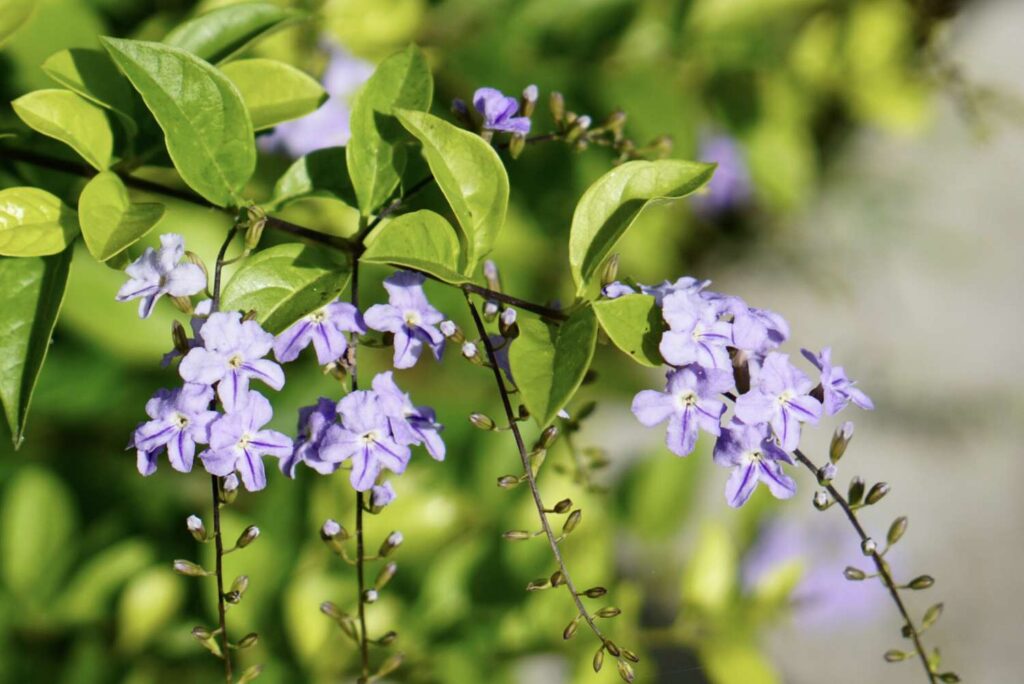
The Duranta Repens: A Low-Maintenance Ornamental Plant
As an ornamental plant, the duranta repens has gained popularity in recent years due to its low-maintenance requirements and attractive foliage. Native to Central America, this shrub-like plant can be easily cultivated in various climates, making it a great choice for gardeners.
Characteristics of Duranta Repens
The duranta repens is characterized by its slender stems covered with dense, green foliage, reaching up to 5 meters in height. The leaves are oval-shaped and small, with a glossy appearance. During the late spring and early summer, the plant produces blue-violet flowers with white margins, forming pendulous clusters. In autumn, the flowers are followed by small yellow berries that persist on the plant for several weeks.
This ornamental plant is perfect for creating large, flowering cespugli in combination with other species. However, due to its vigorous growth, it’s essential to provide ample space for the duranta repens to grow freely and maintain maximum aesthetic appeal.
Growing Duranta Repens: Tips and Tricks
To successfully cultivate a duranta repens, follow these key considerations:
Exposure
The duranta repens prefers bright, sunny locations or partially shaded areas. In regions with very hot climates, it’s ideal to provide direct sunlight for at least four to five hours per day.
If the plant remains in a shaded area for an extended period, it will only produce leaves and not flowers. Additionally, placing the plant in a protected location during cold winter months can help prevent damage from frosty winds and dry soil.
Soil
The duranta repens is adaptable to common garden soil but prefers soft, rich soil with good drainage. If the soil is compacted or clay-like, the plant may become stressed and less vigorous.
To minimize stress, it’s best to transplant the duranta repens during periods of minimal frost risk.
Watering
The plant requires regular watering from spring to fall. During hot summer months, the duranta repens can tolerate some drought, but consistent moisture promotes flowering.
Water the plant when the soil is completely dry, and avoid overwatering to prevent root rot.
Fertilization
To provide nutrients for optimal growth and flowering, fertilize the duranta repens with a liquid fertilizer specifically formulated for blooming plants. Dilute the fertilizer in water according to the manufacturer’s instructions.
Alternatively, you can use a slow-release granular fertilizer every two months to ensure steady nutrient supply.
Pruning
Prune the duranta repens during its dormant season (winter) or late summer/early fall to maintain an optimal shape and encourage new growth. Remove any crossed branches to promote an even, balanced appearance.
Cut back about one-third of the stems to stimulate new shoots.
Propagation
The duranta repens can be propagated through seeds or stem cuttings:
- Seeds: Sow seeds in spring using a specialized potting mix and provide adequate warmth.
- Stem Cuttings: Take cuttings in March using clean, disinfected tools. Plant the cuttings in well-draining soil after ensuring they are robust enough to handle handling.
Pests and Diseases
As with other plants, the duranta repens is susceptible to pests like aphids, scale insects, and mites. Regularly inspect your plant for signs of infestation and treat promptly using broad-spectrum insecticides or biologically derived treatments that respect the environment.
Additionally, the duranta repens is prone to fungal diseases such as root rot caused by poor drainage, especially in overwatered plants. To prevent this, ensure proper drainage when planting in containers or soil beds.
Conclusion
The duranta repens is an attractive and low-maintenance ornamental plant suitable for various climates. By following the guidelines outlined above, gardeners can successfully cultivate a healthy, flowering duranta repens and enjoy its beautiful foliage year-round.
Frequently Asked Questions
- How often should I water my duranta repens?
Regular watering during spring to fall is recommended. - Can I grow duranta repens in partial shade?
While the plant prefers bright, sunny locations, it can tolerate partial shade, but may not produce abundant flowers. - What type of fertilizer should I use for my duranta repens?
A liquid fertilizer specifically formulated for blooming plants is recommended. - How often should I prune my duranta repens?
Prune during the dormant season or late summer/early fall to maintain shape and promote new growth. - What pests can affect my duranta repens?
Regularly inspect for aphids, scale insects, mites, and other common pests.
Common Problems with Duranta Repens
While the duranta repens is generally a hardy plant, it can be susceptible to certain problems that may impact its health and appearance. Some common issues include:
-
Overwatering: The duranta repens can be prone to root rot if the soil remains waterlogged for an extended period. Regularly inspect the roots for signs of decay or softening.
-
Pests and Diseases: As mentioned earlier, pests like aphids, scale insects, and mites can infest the plant. Fungal diseases such as root rot may also occur due to poor drainage or overwatering.
-
Vigorous Growth: The duranta repens can grow rapidly and become unruly if not pruned regularly. Prune during its dormant season (winter) or late summer/early fall to maintain shape and promote new growth.
-
Hardiness Zones: While the duranta repens is adaptable to various climates, it’s best suited for hardiness zones 10-12. In cooler regions, provide protection from frosty winds and dry soil during winter months.
-
Propagation Challenges: Propagating duranta repens through stem cuttings can be challenging. Ensure the cutting is robust enough to handle handling, and plant in well-draining soil with minimal risk of root rot.
Managing Common Problems
To address common problems with duranta repens, follow these tips:
- Overwatering: Regularly inspect the roots for signs of decay or softening. Reduce watering during hot summer months.
- Pests and Diseases: Regularly inspect for pests like aphids, scale insects, mites, and fungal diseases such as root rot. Treat promptly using broad-spectrum insecticides or biologically derived treatments that respect the environment.
- Vigorous Growth: Prune during its dormant season (winter) or late summer/early fall to maintain shape and promote new growth.
- Hardiness Zones: Provide protection from frosty winds and dry soil during winter months if growing in cooler regions.
- Propagation Challenges: Use clean, disinfected tools when taking stem cuttings, and ensure the cutting is robust enough to handle handling.
Conclusion
The duranta repens is an attractive and low-maintenance ornamental plant suitable for various climates. By understanding its characteristics, growth habits, and potential problems, gardeners can successfully cultivate a healthy, flowering duranta repens and enjoy its beautiful foliage year-round.
Tips for Creating Cespugli with Duranta Repens
Creating large, flowering cespugli in combination with other species is perfect for showcasing the duranta repens. To achieve this, consider the following tips:
-
Choose Companion Plants: Select plants that complement the duranta repens’s growth habits and foliage colors. Some popular companion plants include impatiens, coleus, and begonias.
-
Prune Regularly: Prune the duranta repens regularly during its dormant season (winter) or late summer/early fall to maintain shape and promote new growth.
-
Provide Adequate Space: Ensure ample space for the duranta repens to grow freely, allowing it to reach its full height of up to 5 meters.
-
Fertilize Regularly: Fertilize the duranta repens with a liquid fertilizer specifically formulated for blooming plants to promote flowering and healthy growth.
-
Mulch and Water: Mulch around the base of the plant to retain moisture, suppress weeds, and regulate soil temperature. Regular watering during spring to fall is recommended.
By following these tips, gardeners can create stunning cespugli with duranta repens that showcase its beauty and add a touch of tropical flair to any outdoor space.
Care Tips for Duranta Repens in Containers
Growing duranta repens in containers requires special care due to the plant’s sensitivity to temperature fluctuations and soil moisture. To ensure optimal growth, follow these tips:
-
Choose the Right Container: Select a container with good drainage holes to prevent root rot. A minimum depth of 30 cm is recommended for this plant.
-
Select Suitable Potting Mix: Use a well-draining potting mix specifically designed for tropical plants like duranta repens.
-
Provide Adequate Space: Ensure the container provides ample space for the duranta repens to grow freely, allowing it to reach its full height of up to 5 meters.
-
Monitor Temperature Fluctuations: Keep the plant away from frosty winds and extreme temperature fluctuations. Duranta repens prefers temperatures between 15°C and 28°C (59°F-82°F).
-
Water Regularly: Water the duranta repens regularly, taking care not to overwater or underwater.
-
Fertilize Regularly: Fertilize the duranta repens with a liquid fertilizer specifically formulated for blooming plants to promote flowering and healthy growth.
By following these tips, gardeners can successfully grow duranta repens in containers and enjoy its beautiful foliage year-round.
Common Pests of Duranta Repens
As with other plants, duranta repens is susceptible to various pests that may impact its health and appearance. Some common pests include:
- Aphids: These small, soft-bodied insects feed on plant sap and cause curled or distorted leaves. Treat promptly using broad-spectrum insecticides.
- Scale Insects: These armored insects secrete a sticky substance called honeydew, which can attract ants and other pests. Regularly inspect for signs of infestation, and treat promptly using broad-spectrum insecticides.
- Mites: These tiny arachnids feed on plant sap and cause yellowing or bronzing leaves. Treat promptly using broad-spectrum insecticides.
Common Diseases of Duranta Repens
Duranta repens can also be susceptible to various fungal diseases that may impact its health and appearance. Some common diseases include:
- Root Rot: This disease causes the roots to decay, leading to yellowing or droopy leaves. Ensure proper drainage when planting in containers or soil beds.
- Leaf Spot: This disease causes small, circular spots on the leaves, which can eventually turn black and die. Treat promptly using fungicides specifically formulated for leaf spot.
By understanding common pests and diseases of duranta repens, gardeners can take proactive steps to prevent infestation and treat any issues that may arise.
In summary, the duranta repens is an attractive and low-maintenance ornamental plant suitable for various climates. By following guidelines outlined above, gardeners can successfully cultivate a healthy, flowering duranta repens and enjoy its beautiful foliage year-round.


