
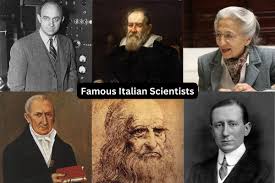
As we go about our daily lives, it’s easy to take for granted the many technological advancements and scientific discoveries that have made our world a more comfortable and convenient place. But let’s take a moment to appreciate the famous scientists who paved the way for us. These individuals, often celebrated for their groundbreaking work, left an indelible mark on human history.
The Pioneers of Science
In a carousal of famous scientists, we find ourselves drawn to those who dared to think “out of the box.” This invitation to challenge conventional wisdom is an open call to anyone interested in discovering something new about themselves and the world. From Galileo Galilei, the father of scientific methodology, to Albert Einstein, whose theory of relativity revolutionized our understanding of space and time.
Galileo Galilei: The Father of Scientific Methodology
Galileo was born in Pisa, Italy in 1564 and was raised by his parents after his mother’s death. He was a brilliant student and went on to study medicine at the University of Pisa. However, he soon became fascinated with mathematics and physics, and eventually switched his focus to these fields.
Galileo made significant contributions to our understanding of motion and gravity, and was one of the first scientists to use experimentation to support his theories. He was also a strong advocate for the Copernican heliocentric model of the universe, which placed the sun at the center of the solar system rather than the Earth.
Albert Einstein: Revolutionizing Our Understanding of Space and Time
Einstein was born in Ulm, Germany in 1879 and grew up in Munich, where he developed an interest in physics and mathematics. He went on to study physics at the Swiss Federal Polytechnic University, where he graduated in 1900.
In 1905, Einstein published four groundbreaking papers that laid the foundation for modern physics. His theory of special relativity posited that time and space are relative, and that the laws of physics are the same everywhere in the universe. This theory challenged the long-held notion of absolute time and space, and paved the way for a new understanding of the universe.
Isaac Newton: Decomposing White Light into Its Constituent Colors
Newton was born in Woolsthorpe, England in 1643 and grew up to be a renowned physicist and mathematician. He was knighted by Queen Anne in 1705 for his contributions to science.
In 1666, Newton conducted a series of experiments with prisms, which led him to decompose white light into its constituent colors. This discovery laid the foundation for modern optics and paved the way for a deeper understanding of the behavior of light.
Augustin-Jean Fresnel: Describing the Behavior of Light as It Passes Through Various Mediums
Fresnel was born in Lille, France in 1788 and grew up to be a renowned physicist and mathematician. He was elected to the French Academy of Sciences in 1816 for his contributions to optics.
In 1822, Fresnel published a series of papers that described the behavior of light as it passes through various mediums. His work on diffraction, refraction, and reflection helped establish optics as a distinct branch of physics.
James Clerk Maxwell: Formulating the “Four Equations” That United Electricity and Magnetism
Maxwell was born in Edinburgh, Scotland in 1831 and grew up to be a renowned physicist and mathematician. He was elected to the Royal Society of Edinburgh in 1856 for his contributions to optics and electromagnetism.
In 1864, Maxwell published four groundbreaking equations that united electricity and magnetism. His work on electromagnetic theory helped establish Maxwell as one of the greatest scientists of all time.
The Light-Seekers: Exploring the Wonders of Light
Many famous scientists have made significant contributions to our understanding of light and its many forms. Let’s take a look at some of these luminaries:
- Isaac Newton, who decomposed white light into its constituent colors using his prism.
- Augustin-Jean Fresnel, whose equations described the behavior of light as it passes through various mediums.
- James Clerk Maxwell, who formulated the “four equations” that united electricity and magnetism.
The Words of Wisdom: Famous Scientists on Life and Science
We can learn a great deal from the words and thoughts of these famous scientists. Here are some quotes that offer insights into their perspectives:
- Charles Darwin believed that the term “creation” referred to a process in which ignorance reigns supreme.
- Rita Levi Montalcini countered racist ideologies, stating that Jewish people were not part of the Italian racial heritage.
- Albert Einstein famously said, “Any child can kill a flea, but it takes a great man to kill two.”
- Marie Curie likened scientists in their laboratories to children who are fascinated by the wonders of nature.
- Stephen Hawking argued that the laws of science should apply equally to all observers, regardless of their speed.
Women in Science: Celebrating Female Pioneers
While men have dominated the scientific community for centuries, women have made significant contributions to various fields. One such scientist is Margherita Hack, an Italian astrophysicist who led the Osservatorio astronomico di Trieste.
Margherita Hack: Breaking Barriers in Astrophysics
Hack was born in Rome, Italy in 1922 and grew up to be a renowned astrophysicist. She conducted research on the structure of galaxies and the behavior of stars, and led several expeditions to study the universe.
In 1970, Hack became the first woman to serve as president of the International Astronomical Union, an organization that represents astronomers from around the world. Her leadership helped pave the way for future generations of women in science.
Conclusion
Famous scientists like Galileo Galilei, Charles Darwin, and Albert Einstein have left a lasting impact on human history. By embracing innovation and challenging conventional wisdom, they paved the way for us to live more comfortably and enjoy the fruits of their labor.


